65% of U.S. homeowners say owning a home costs more than expected. Staying put is getting harder, too.
For years, homeownership was pitched as the finish line. Save for the down payment, buy the house and build wealth over time. According to new research from Unlock, a company that helps homeowners access the equity in their home, 75% of U.S. homeowners say they have no plan to buy or sell a home this year. That sounds like stability. But it is starting to feel more like stagnation.
Owning a home turns out to cost more than people thought it would. The survey found that 65% of U.S. homeowners say it is more expensive than what they expected before they bought. The math goes past the mortgage. Nationwide, property taxes climbed 41% between 2018 and 2025, according to the Lincoln Institute of Land Policy, with home insurance, maintenance and everyday costs piling on top.
Homeowners are cutting back in places that used to be off-limits. Twenty-two percent of respondents reported putting less into retirement to keep up with the cost of owning their home. Another 33% are putting off bigger purchases, like a car. These are not inconsequential cuts. They are cuts to the financial goals owning a home is supposed to make easier in the first place, like building a nest egg, growing an emergency fund or saving for the future.
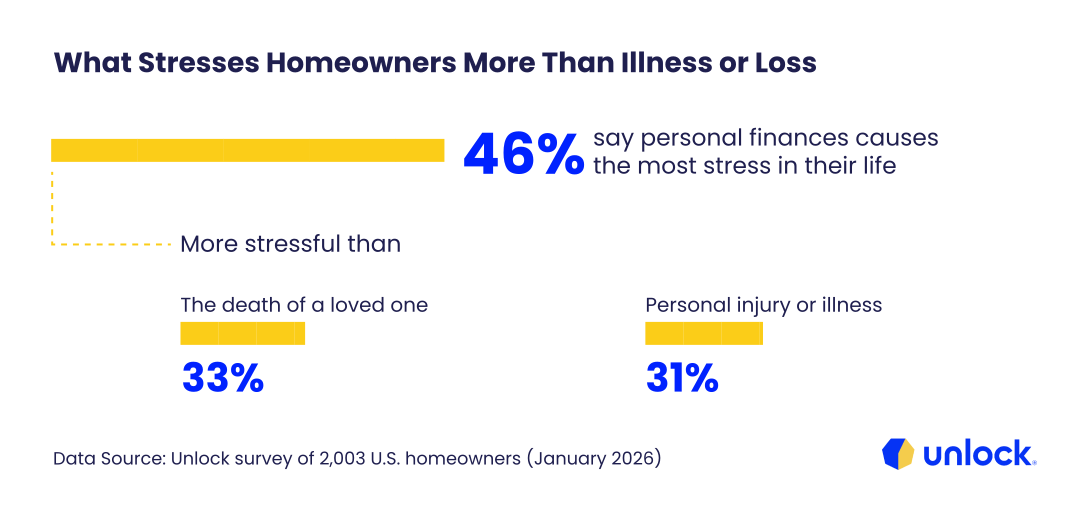
The pressure shows up in the present, too. Nearly a third of homeowners have less than $1,000 in emergency fund savings. More than half say day-to-day expenses are causing significant stress in their lives.
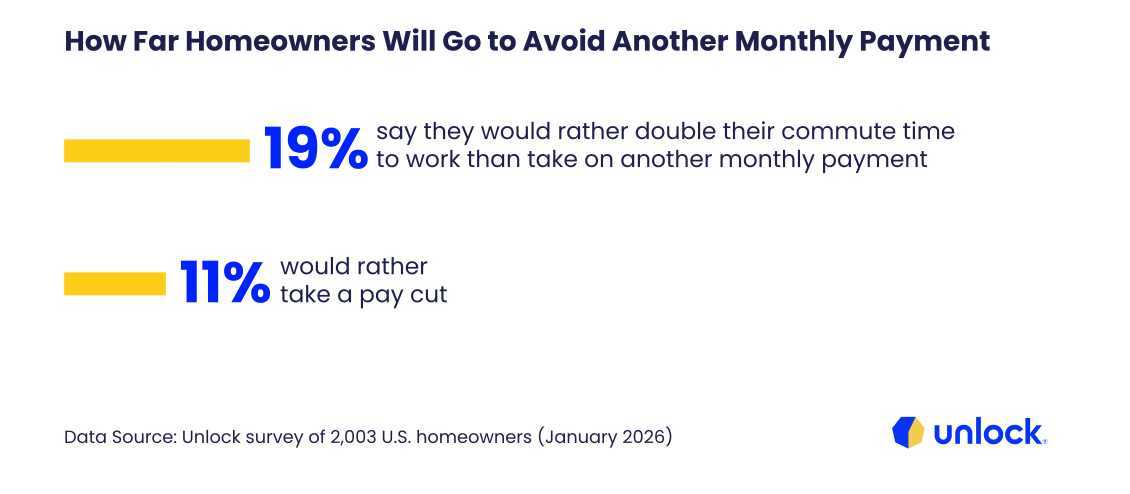
It is not only about cutting back or feeling stressed about day-to-day expenses. The survey found 19% of U.S. homeowners say they would rather double their commute time to work than take on another monthly payment. For homeowners already paying a mortgage, insurance, taxes and maintenance, another bill ranks below an extra hour in traffic.
Costs are only half the story. Homeowners are also sitting on real wealth, though they cannot always say how much. The survey found almost half of U.S. homeowners, are not sure how much equity they have built up in their home, including 28% who say they are not sure how to find out. The average mortgaged home in the U.S. holds about $299,000 in equity, according to Cotality, a data and analytics company.
Ask homeowners how they feel about having equity in their homes and the answers do not quite line up. Sixty percent say the option to leverage home equity provides an extra level of financial security. Yet 48% say they view home equity as long-term wealth and retirement security, and would only leverage it as a last resort. They want the option there. They just do not want to use it.
The result is a kind of holding pattern. Homeowners are paying more, staying put in homes they cannot easily afford to leave and sitting on wealth they would rather not disturb. The usual options come with a catch. Selling means moving. Refinancing means giving up a low locked-in mortgage rate. According to Realtor.com, 51.5% of outstanding U.S. mortgages still carry rates at or below 4%. Taking out a home equity line of credit or home equity loan adds another monthly payment. Each option asks for something homeowners are trying to avoid. The open question is whether the standard options are still the only options. What used to look like a financial finish line is starting to look more like a treadmill.
Methodology
Unlock commissioned Atomik Research to conduct an online survey of 2,003 homeowners in the United States. The margin of error is plus or minus 2 percentage points at a 95 percent confidence level. Fieldwork was conducted between January 24 and January 30, 2026.
Atomik Research, part of 4media group, is a creative market research agency.