
Market Trends & Insights
Homeowners Cutting Spending to Afford Homeownership
|
Feb 24, 2026
|5 min
Costs are up across the board. Wages haven’t kept pace. And the biggest asset most Americans own sits largely locked away, unavailable for the financial challenges facing today’s homeowners.
Homeowners need better options and flexibility.

65%
of homeowners say the cost of homeownership is more expensive than they expected
46%
of homeowners say personal finances cause the most stress in their lives
52%
say day-to-day expenses like gas and groceries are causing moderate to extreme financial stress
76%
believe homeownership remains one of the best ways to grow personal wealth
60%
say having the option to leverage home equity provides an extra level of financial security
Source Unlock Homeowner Survey, February 2026 Read more
Homeowners are feeling the pressure across their entire budget, and it’s growing. Data confirms “the squeeze” homeowners are trying to manage, according to analysis commissioned by Unlock in 2026.

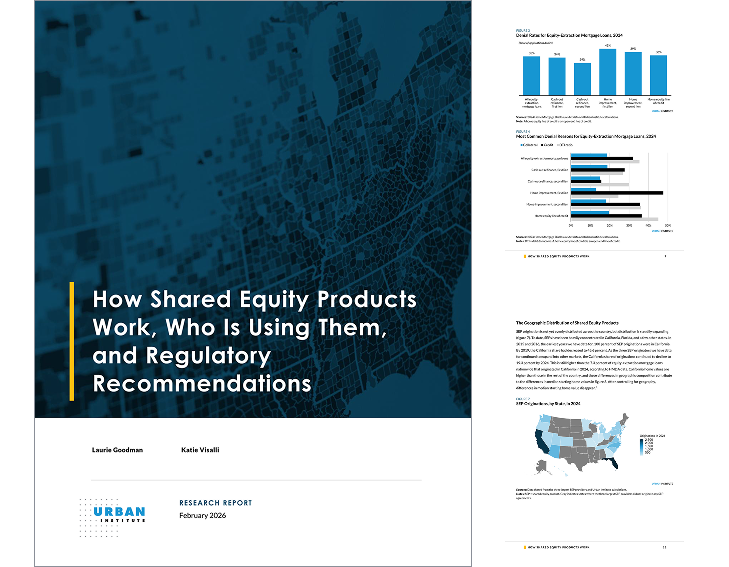
The Urban Institute studied shared equity products, the homeowners who use them, and what regulators should know. The findings challenge a lot of assumptions.
Urban Institute, February 2026. Funded independently by the Housing Finance Innovation Forum.
$30 trillion in wealth is locked in equity, unavailable to most homeowners without refinancing to a higher rate mortgage or selling. Instead, a Home Equity Agreement (HEA) lets homeowners access the value already in their home — without monthly payments or the need to refinance.
It opens options, without adding new monthly obligations.


In a May 2026 article, Housingwire’s Flávia Furlan Nunes and Unlock’s Jim Riccitelli discuss what distinguishes Shared Equity Products (SEPs) from other types of financing, recent regulatory and legal efforts that target the industry, and the factors that are driving demand among homeowners of all ages.


No. But you must pay your mortgage, taxes, HOA dues and other housing obligations just as you normally do.
Yes, we do! Pricing is typically higher for a rental property versus a primary residence.
Alabama, Arizona, California, Florida, Hawaii, Idaho, Indiana, Kentucky, Missouri, Montana, Nevada, New Hampshire, New Jersey, New Mexico, North Carolina, Ohio, Oregon, Pennsylvania, South Carolina, Tennessee, Utah, Vermont, Virginia, Wisconsin, and Wyoming
You can use the funds from your home equity agreement (HEA) for whatever you need.
In some cases, Unlock may require you to pay off certain debts or property liens when your agreement is originated, but beyond that, there are no restrictions on how you use the net cash you receive.
Unlock’s Home Equity Agreement (HEA) lets you turn your home’s equity into cash today.
Here’s how it works: You receive cash upfront and, in exchange, Unlock receives a share of your home’s value when the agreement ends. Unlock places a lien on the property to secure the agreement. During your term, you continue to own and live in your home. You make no monthly payments and there’s no prepayment penalty if you choose to end the agreement early.
You have two main ways to end your HEA – either use proceeds from the sale of your home, or use savings or another form of financing to buy out Unlock’s share. When you’re ready to end the agreement or you reach the end of the term, you make a single Settlement Payment equal to Unlock’s share of your home’s value at that time.
You remain the owner of your home throughout the term of your home equity agreement (HEA). You stay on title, make decisions about the property, and continue to live in and use your home as you normally would.
What Unlock receives is a contractual right to a share of your home’s value at the end of the agreement — up to 10 years later. Unlock secures that right with a lien on the property, which is recorded on title and visible during title searches, but does not affect your day-to-day ownership.
Qualification is based primarily on your home’s equity and value.
To qualify, you’ll need:
A Home Equity Agreement (HEA) from Unlock gives you cash based on your home’s current value, with no monthly payments during the term.
Having no monthly payments — and, instead, one payment at the end — is a main benefit. Here are some others:
Requirements for an Unlock Home Equity Agreement (HEA) are primarily built around a different set of criteria than a conventional loan — your home’s equity and value, not your income or credit score.
Unlock accepts credit scores starting at 500 for single-family homes and townhomes used as primary residences, and 550 and above for condos, 2–4 unit properties, investment properties, and second homes.
Applying won’t affect your credit score either. Unlock uses a soft credit pull at every stage — including full application – so there’s no hard credit pull, ever.
You can get a free estimate right on Unlock’s homepage – simply enter your address and you’ll get a free estimate of your home’s current value in seconds. Keep in mind that the online estimate is a starting point. Your home’s actual value is determined by an independent valuation during the application process.
Credit scores starting at 500 qualify for a Home Equity Agreement (HEA) from Unlock when the property is a single-family home or townhome used as a primary residence. For condos, 2–4 unit properties, investment properties, and second homes, the minimum is 550.
No. Unlock’s Home Equity Agreement (HEA) does not require income verification or proof of income to qualify. Qualification is based primarily on your home’s equity and value.
See how much equity your home could unlock — without monthly payments or the need to refinance.
Terms and conditions apply. Not all homeowners will qualify. Use home equity responsibly.