 Skylar Olsen
Key Takeaways
- American homeowners have watched their costs rise steadily — food, gas, healthcare, childcare — to the point where essential spending claims the majority of household income in most states.
- Property insurance, taxes, and maintenance have compounded the pressure, leading non-mortgage homeownership costs to claim nearly 10% of income nationally.
- High mortgage rates are making it difficult for homeowners to access their equity through traditional options like a cash-out refinance — once the go-to relief valve.
There’s no doubt that homeowners have built up considerable wealth, just over the past six years alone. U.S home prices are up almost 47% since the beginning of 2020. Over the same time, record low mortgage rates allowed homeowners to strategically refinance for even lower rates. Today, the typical homeowner has over $274,000 in home equity. This is an enviable financial position—on paper.
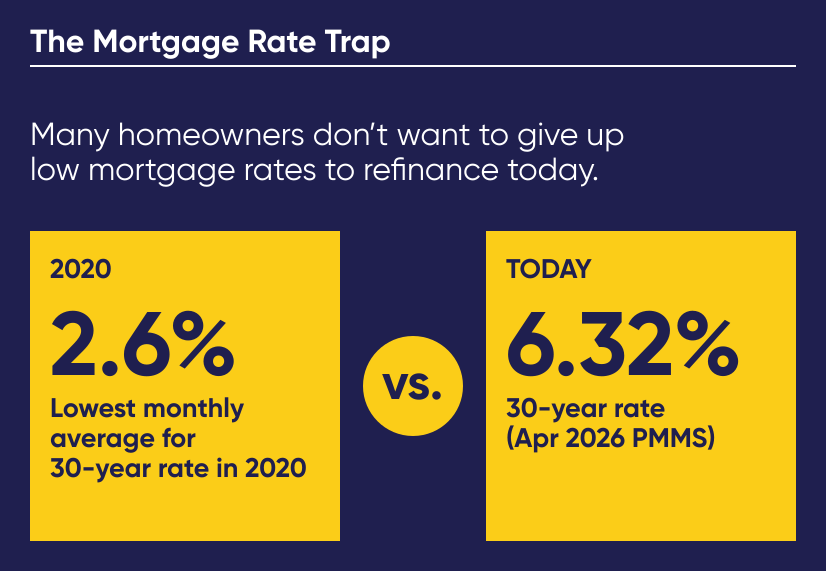
However, not everyone can afford to access that new wealth without selling their home. For most homeowners, refinancing now means giving up historically low mortgage rates, and the low monthly payments that go with them— effectively imposing a steep liquidity tax.
The Affordability Crisis
Life today is expensive. While compensation growth nationally has returned to near its pre-pandemic pace, inflation remains more than twice as high, and on the rise again.
What we spend on non-housing essentials – gas, food, and healthcare – is up 31% from 2020. Today, $1 of every $4 of income goes to those three categories alone. It used to be $1 in every $5.
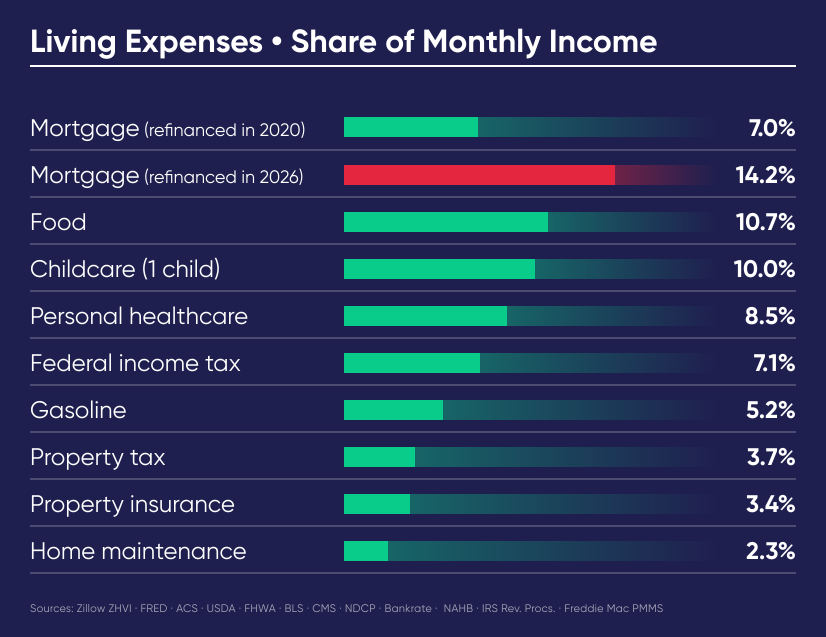
Many homeowner households face even more pressure. Let’s say you’ve got two kids under three in childcare. Now we’re talking over half (55%) of your income going towards just gas, food, healthcare, and childcare alone. And yet there is so much else to budget for: federal income taxes, mortgage payments, rising property insurance, and so on.
During the era of low mortgage rates, homeowners became accustomed to dipping into their home equity during times of financial strain. A cash-out refinance could both lower your monthly payments and provide needed liquidity. That opportunity is now gone – the Federal Reserve won’t comfortably lower interest rates in the face of sticky inflation and geopolitical conflict. As wage growth continues to slow and general inflation ticks up again, the strain on household budgets will continue to worsen, and the likelihood of lower mortgage rates for refinance are less likely.
The Cost of Basic Necessities Keeps Climbing
Impacting almost everyone, the costs of everyday essentials like food and gas – the most volatile prices among our spending categories – have increased substantially in recent years.
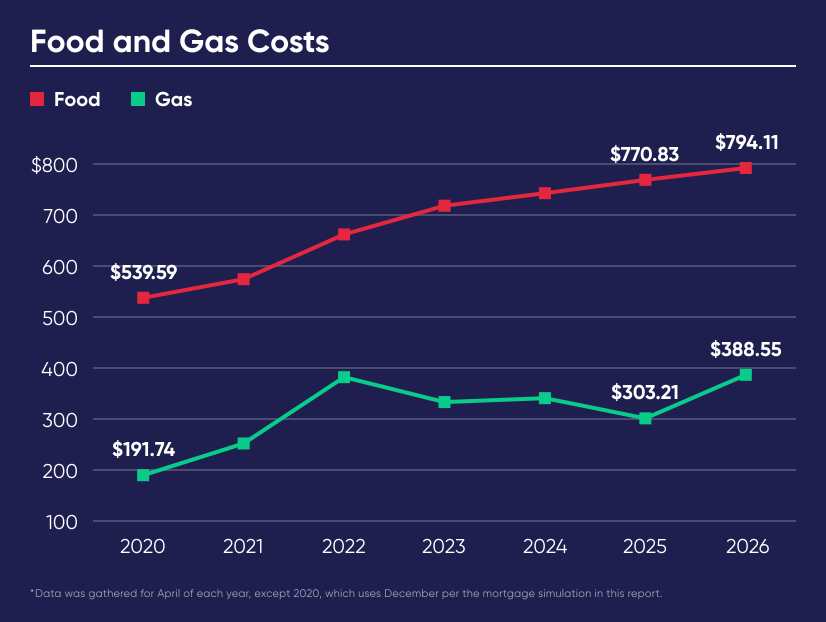
Nationally, $794, or 10.7% of total pre-tax household income, is dedicated to food purchases. Total spending on food is up 47% from December 2020, when the mortgage rates hit historic lows, and up 3% over the last 12 months.
Due to the recent conflict with Iran – a major producer and member of OPEC, the price of gasoline is even more punishing on household budgets lately. Accounting for both direct (purchases at the pump) and indirect spending (the increased costs filtering down to customers from producer purchases), spending on gasoline increased 28% over the last year. This is the largest increase across spending categories – with the bulk of that increase coming since February 2026 – the beginning of military action against Iran. At today’s high prices, spending on gasoline more than doubled (103% increase in spend) since 2020 – a time of low mobility as society grappled with lockdown during the height of the COVID-19 pandemic.
Healthcare Continues to Take Toll on Household Budgets
Though moderating slightly since the height of the COVID-19 pandemic, out-of-pocket spending on healthcare remains one of the largest essential spending categories — U.S. households spend roughly 8.5% of their household income, out-of-pocket on healthcare. This includes doctors and hospital visits, prescriptions, durable medical devices, and elder- and home care. Personal spending on healthcare depends on many factors – including both government and employer contributions and so varies widely by state. The share of household income dedicated to health care is vastly higher in less populated states, like South Dakota (22.6%), Alaska (20.3%), West Virginia (19.3%), and Wyoming (15.4%).
Parents Feeling the Pinch
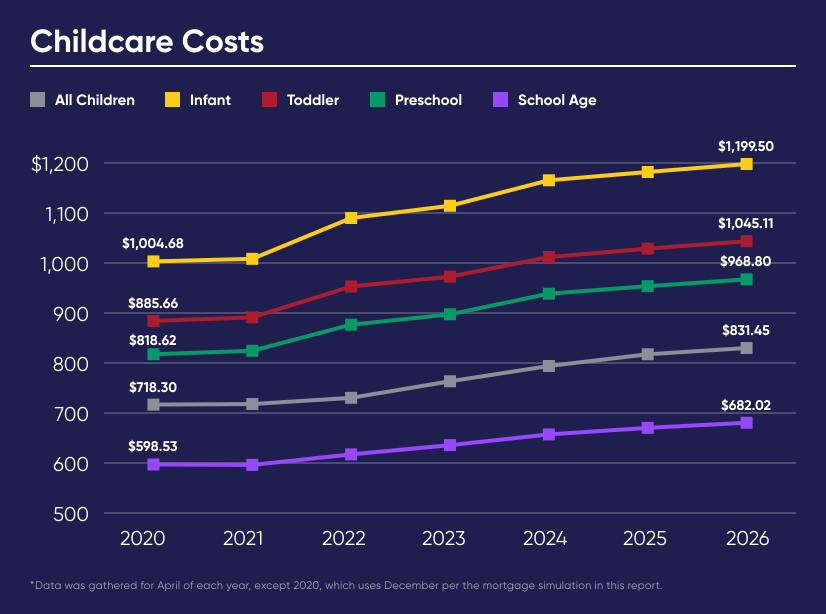
For parents, the largest spending category is often childcare. Care for the average child – more likely to be school age rather than an infant – runs $831 / month. That includes school-age children needing just after-school care ($682 / month) and infants needing smaller adult-to-child ratios for a fuller workday ($1,199 / month). The median gap between siblings is just two years, meaning many are paying for two or more children in care at once. A household with two children under three in childcare, spends $2,245 a month, nearly 30% of their income on childcare alone.
Homeownership Becoming More Expensive
With the rise in property values, property tax payments have grown substantially: up 20.5% in April 2026 from 2020 – a period of incredible home value growth, but only up 0.8% from last year (April 2025) as home value growth slows to a crawl.
Property insurance costs however continue to escalate. With increased damages to properties from natural disasters driving insolvency among insurers, spending on property insurance surged 74.8% from 2020, and continued to grow 6.2% over the past year.
Regular household maintenance costs have also increased – conservatively up 35.1% since 2020.
Taken together, non-mortgage costs now claim 9.4% of median household income nationally. That burden is much higher in states heavily impacted by recent wildfires and hurricanes. Florida homeownersbear the largest burden, with non–mortgage homeowner costs claiming 14.9% of household income. That’s followed by New Jersey (14%), New York (13.9%) and California (13.2%).
For the majority of homeowners, a sub-4% mortgage rate, and the low mortgage payment that goes with it, is their saving grace. The median homeowner in the U.S. purchased their home in 2012, when national home values were at their lowest after the Global Financial Crisis of the 2000s. A homeowner who took the opportunity to refinance at record low rates (averaging 2.68% during December 2020 – the height of the COVID-19 crisis) now needs only 6% of their household income for the mortgage each month.
Barriers to Liquidity
Pulling out $50,000 with a cash-out refinance today would near double the payments of the 30% of mortgage holders currently holding mortgage rates between 3% and 4%, and more than double the mortgage payments of the 20% of mortgaged homeowners with mortgage rates below 3%. For the strategic U.S. homeowner who took advantage of the sub-3% mortgage rates of 2020, pursuing a $50,000 cash-out refinance today would add $477 a month to their obligations. That’s an additional 6.3% of household income, a substantial increase at a time when affordability in general is already under strain.
Working Parents with Two Children Bearing the Largest Burden
Combining all essential spending – homeowner costs, gasoline, food, out-of-pocket personal health care costs, and childcare for two average-age children – and accounting for federal income taxes, leaves little left for anything else, including: retirement, emergency, or vacation savings; clothes, toys or vehicles; education, and recreation. Once a source of liquidity, tapping home equity through a traditional cash-out refinance is no longer a viable option for many homeowners who have built equity, but whose cash flow is failing to keep pace with rising expenses.
For a working-parent household holding onto the record low rates of 2020, the national aggregate total burden stands at 66.8% of household income in April 2026—up 3.5 percentage points from 2020 and up 1.1 percentage point from one year ago. The year-over-year increase largely reflects continued growth in food and gasoline prices, ongoing property insurance escalation, and rising childcare costs, not any change in the mortgage payment (which is locked in from the 2020 refinance).
High Costs Hit Rural States Hard
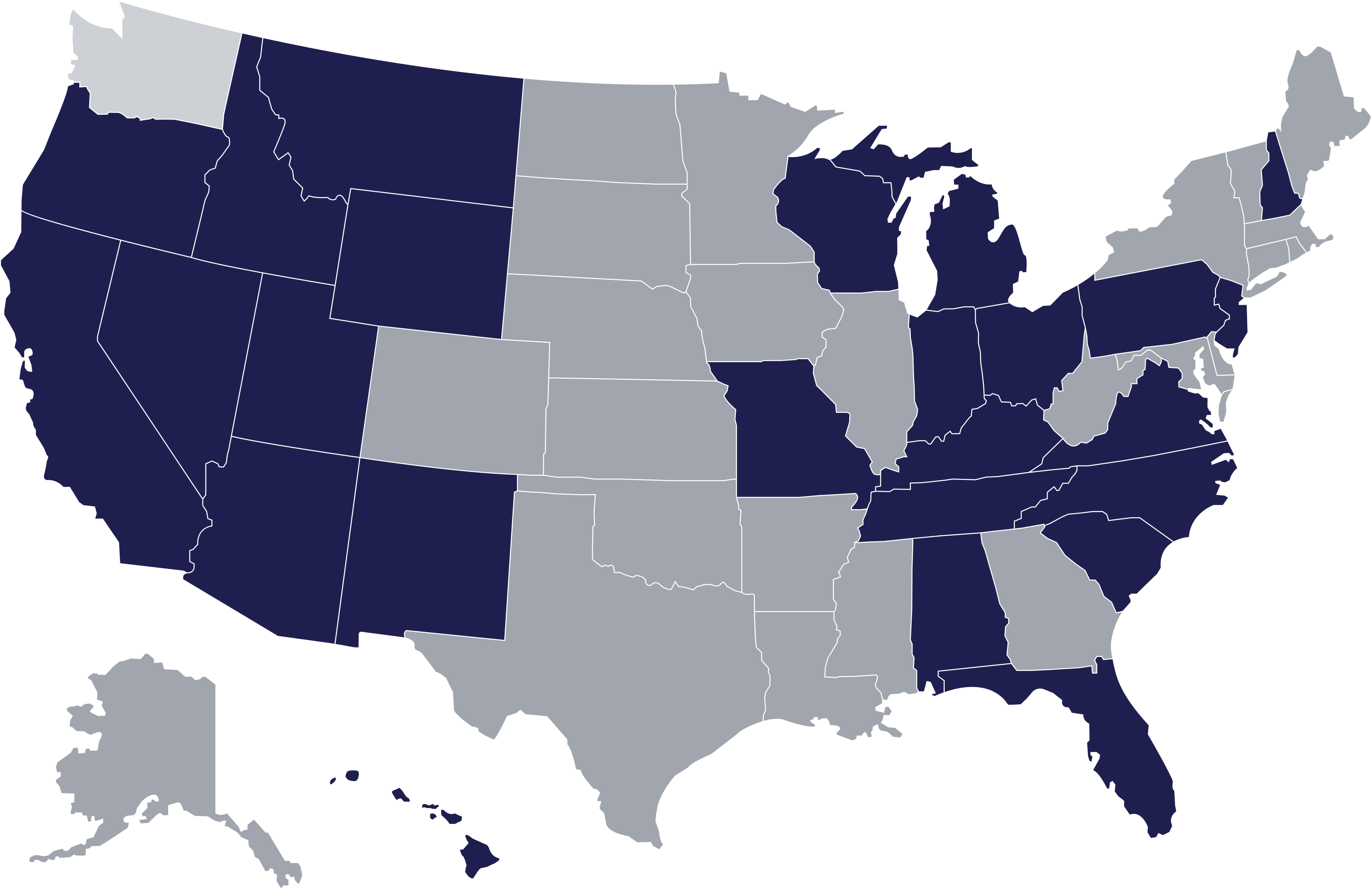
The geographic spread is wide. Six states see burdens above 80% of income without any new refinancing:
- Montana: 82.1% — the highest no-refi burden nationally, driven by elevated healthcare costs (a legacy of thin insurance markets) and childcare prices relative to local incomes.
- Alaska: 80.9% — structurally high healthcare and food costs in a high cost-of-living state with limited provider competition.
- Nevada: 80.8% — high housing costs relative to incomes combined with above-average childcare prices.
- Vermont: 77.7% — high childcare and healthcare costs despite moderate housing.
- New York: 77.6% — high housing and childcare costs; the modest year-over-year burden change (−0.4 pp) reflects income growth keeping pace.
- South Dakota: 77.2% — healthcare costs are the primary driver, consistent with the state’s 22.6% healthcare burden.
To see the full monthly spending categories and income burdens by state, click here.
The Equity Trap
Here is the fundamental, structural tension facing a growing share of U.S. homeowners: they have accumulated substantial wealth in home equity, but that wealth is illiquid, and the traditional mechanism for unlocking it—cash-out refinancing—has become prohibitively expensive.
Homeowners who are locked into sub-3% or sub-4% mortgage rates are effectively facing a rate-lock tax: accessing their equity through a cash-out refi requires refinancing the entire existing balance at market rates, not just the cash-out portion. For a homeowner whose existing payment feels feasible, adding $50,000 in liquidity at a cost of doubling their mortgage payment—is a prohibitive price for most households already stretched thin by rising essential costs.
Households with the highest childcare and healthcare burdens are also the ones most likely to need liquidity yet face the steepest penalty for accessing it. The result is a cohort of homeowners who are asset-rich but cash constrained, with few low-cost avenues for relief.
View the full report and methodology here.