 Aimée Bennett
After receiving their home equity agreement (HEA) funds, the vast majority of Unlock homeowners experience meaningful improvements in both their financial position and emotional well-being, according to a recent survey* we commissioned.
The survey found that many homeowners not only achieved their primary financial goal and improved their overall finances but also adopted healthier financial habits and felt a significant increase in positive emotions. The results validate that HEAs can – and do – have the potential to change how homeowners manage their finances and reshape their futures.
Improving finances
Our survey revealed that 95% of Unlock homeowners had a specific plan for how they were going to use the money from their HEAs, and almost all of them (92%) followed the plan they set.
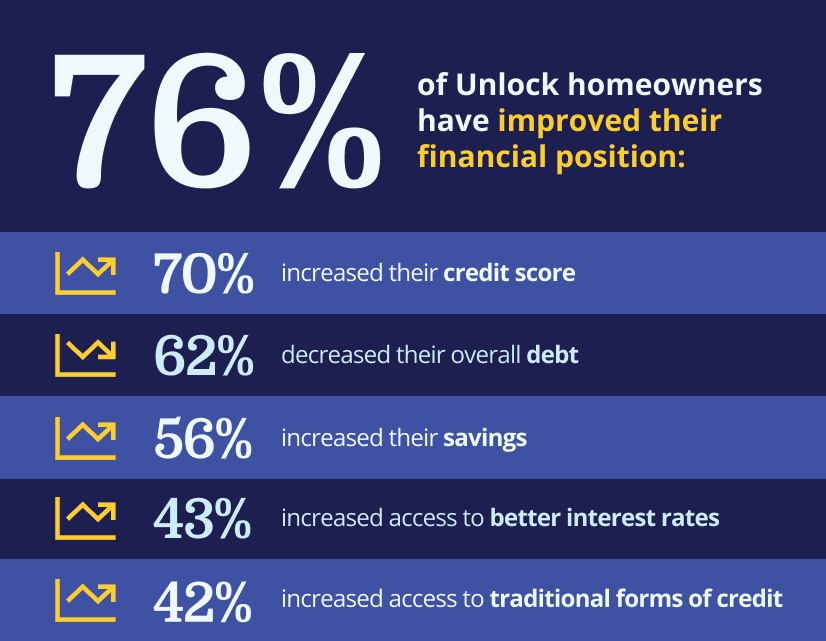
By sticking to that plan, more than 8 in 10 (82%) achieved their primary financial goal with their HEA funds – and 72% of them did so within three months of funding. Beyond that, 76% of our homeowners say they’ve improved their financial position since receiving their funds.
Adopting healthier financial habits
The improvement in financial health comes down to more than dollars and cents. Homeowners experienced positive shifts in attitude and approach to spending as well. Post-funding, 84% of Unlock homeowners report better financial health and behaviors.
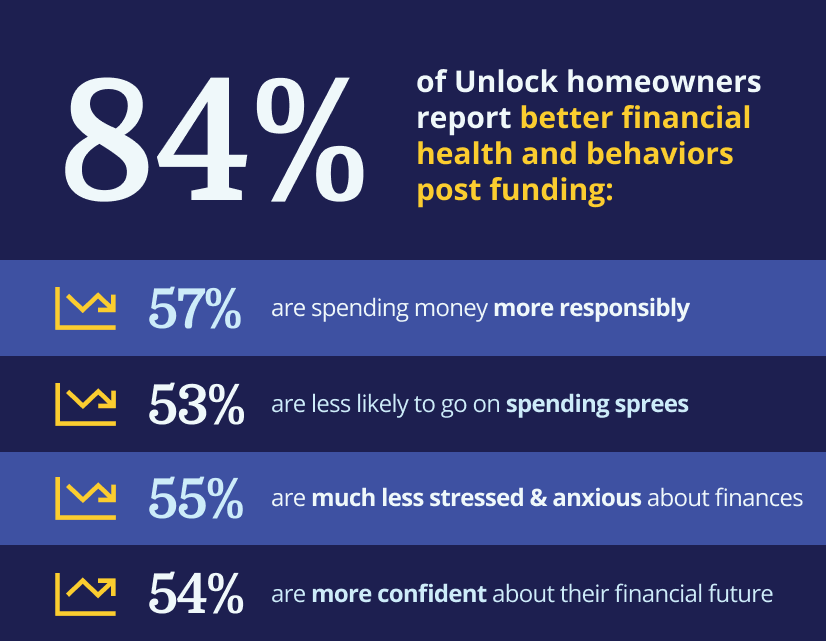
Notably, homeowners who started from poorer financial health show the clearest gains from their Unlock HEAs. The average difference across all of the above statements is at least 18% higher among those who previously “felt stuck” or feared that their money “wouldn’t last.”
We are also seeing that the improvement is not limited to a post-funding “lift.” Among those reporting better financial health and behaviors, as well as those saying they’ve improved their financial position, slightly more than half signed their HEAs over a year ago.
Experiencing powerful emotional shifts
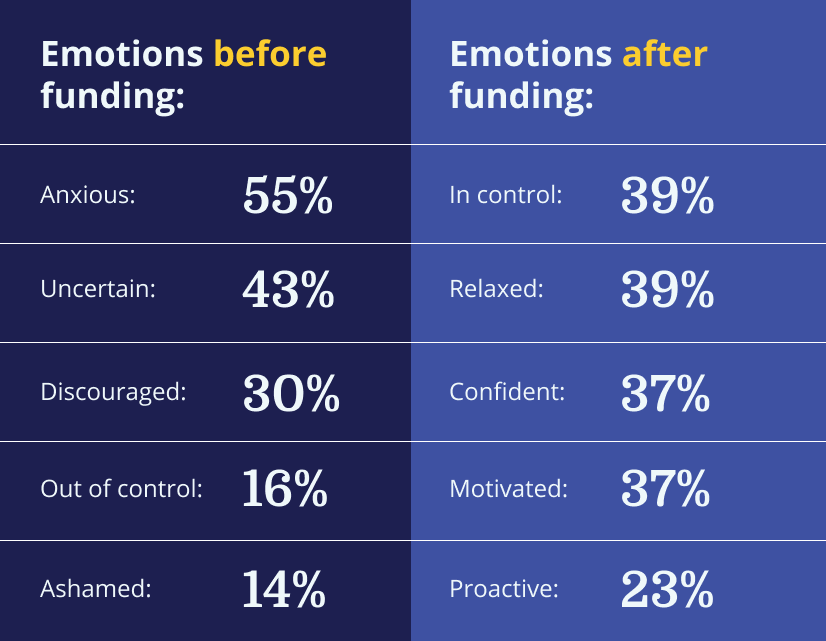
After funding, Unlock homeowners were in large part able to replace anxiety and uncertainty with a sense of control, calm and motivation, so they can plan the future they envision.
Prior to funding, 69% of customers reported negative emotions; only 29% felt positive. After closing their HEA, an astounding 84% reported positive emotions.
Making the Unlock choice
Another takeaway from the survey was that most homeowners (69%) had access to other financing options, like a home equity loan, home equity line of credit, cash-out refinance and/or personal loan – yet turned to the Unlock HEA as their preferred choice.
That said, Unlock can also serve as a lifeline for those who have limited options. The nearly one-third (31%) of homeowners who had limited access to other financing were generally younger (more are Millennials) and more likely to live in households with children. They were also more likely to be from underserved populations, such as Hispanic or African American/Black.
And for homeowners with poor credit, the Unlock HEA offered them relief from real financial pressure: A quarter reported being able to avoid bankruptcy and 17% avoided loan defaults.
Moving forward – with confidence
The data confirms that the Unlock HEA is a flexible, transparent financial option that can be the right choice for a broad range of homeowners, helping them gain stability and offering a path to improved financial health. Over half of homeowners (55%) report the Unlock funds make it more likely that they will achieve their future goals – and that’s a promising outlook.
*Based on a survey commissioned by Unlock and conducted by Egg Strategy from April 23 to May 1, 2025, among 225 Unlock customers who received gift cards after participating. Self-reported results; individual experiences may vary.