 Aimée Bennett
Key Takeaways:
- Accessing your home equity can be a good way to obtain cash you need to pay off debt, make home repairs and improvements, pay medical bills and make large purchases.
- There are many ways to access your home equity, with loan options like a home equity line of credit, home equity loan and a cash-out refinance.
- A home equity agreement offers an alternative way to access home equity, skipping the loan.
Thinking about borrowing against your home equity? If so, it’s time to learn about the options you have. In this article, we’ll look at what it means to access your home equity and explore ways to do so that go beyond traditional loans.
What does it mean to borrow against your home equity
U.S. homeowners hold a collective total of almost $35 trillion in home equity. Compare that number to about $20 trillion of home equity at the beginning of 2020. That’s a 75% increase over just five years.
Those numbers are impressive. But what do they mean for you, an individual homeowner? How do you know how much equity you have in your home? How much of that equity can you access for cash?
What is home equity?
Home equity is the difference between the current market value of your home and what you owe on the property. It is a measure of how much of your home you actually own outright. If you have a mortgage, and have been paying it down over several years, you may have accumulated some – or a lot of – home equity, thanks to increasing home values.
In 2020, home values started to rise steeply in a market characterized by high buyer demand, low interest rates and low inventory of available homes. In February 2020, the national median home price was $270,100. In the first quarter of 2025, it was$416,900 – a jump of almost 55% in five years.
What that means for you is that you may be sitting on a wealth of untapped home equity if you have owned your home for several years and have benefitted from the increases in home values.
Borrowing against your equity
“Tapping into home equity,” “accessing your home equity” and “borrowing against your equity” are oft-heard phrases. But what do they really mean?
For most homeowners, their home is the largest purchase they’ll ever make. It’s likely also their largest asset. But unlike savings accounts, stocks, bonds or mutual funds, much of that asset – the equity in the home – is illiquid. Finding a way to obtain some of the wealth you’ve built in your home requires using one of several financial products. That’s what is referred to as “tapping into,” “accessing” or “borrowing against” your equity.
How much you can obtain will depend on several factors, including how much equity you have in your home, your credit profile and your loan-to-value (LTV) ratio, and what option you choose to tap your equity. While every situation is different, many lenders will let you borrow up to 80% or 85% of your home’s value.
Top ways to borrow against your home equity
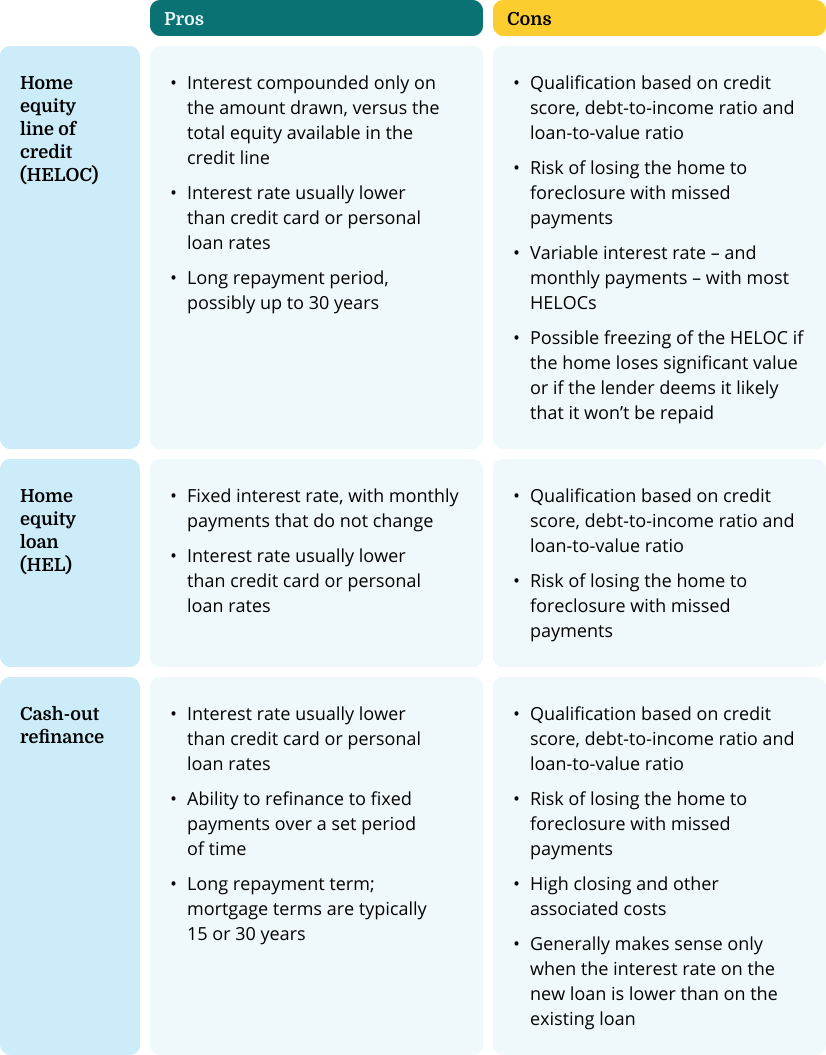
Several ways exist to borrow against your home equity. Popular options include a home equity line of credit, home equity loan and cash-out refinance. Here is a summary, detailing the pros and cons of each approach.
Pros and cons of borrowing against your home equity
With inflation, tariffs and the high cost of living, it can be tempting to jump at the opportunity to turn your equity into cash. As with any financial decision, you’ll want to consider the pros and cons of doing so.
Pros:
- Access to value you’ve earned. Borrowing against your home equity lets you access some of the value you’ve accumulated in your home – which, in many cases, can mean a substantial amount of money.
- Your choice on how to use your money. You can use funds from your home equity for almost anything. Popular uses include: paying off debt: taking care of needed home maintenance and repairs; making home improvements; paying medical bills; paying for educational expenses; and building an emergency fund.
- Lower interest rates than credit cards or personal loans. Rates are determined by credit scores and other factors, and vary by lender, so it’s important to research and compare your options.
- Interest paid on equity-based loans may be tax-deductible. If you use your home equity funds to make certain home improvements, that cost may be tax-deductible. Since this differs by individual, it is important to consult a tax professional to determine if this is applicable to your situation.
- You’re adding debt. With many options to access your home equity, you’re taking on more debt and adding another monthly debt payment to your life. Those payments include both principal and interest.
- Interest rates remain high. If you decide on a loan-based option to access your home equity, consider the the interest rate you can get. Compared to credit cards – where average rates exceed 20% – a rate of 8% or 10% on an equity-based loan might look appealing. But it’s still taking on expensive debt.
- Location rules in the housing market. Just because home values skyrocketed over the past several years doesn’t mean that trend will continue. Plus, the “location, location, location” rule always applies. Housing values and trends are extremely local. Should values decrease in your area, it’s possible that you could find yourself owing more than your home is worth.
- You’re using your home as collateral. With home equity-based loans, the debt you’re adding is secured debt. That means it is backed by a tangible asset – your home. If you miss payments, you risk losing your home.
- You can’t control the economy. In an economy that’s uncertain, you can’t predict your future financial position. If a recession happens, or if serious national or international events occur, job loss can happen even with the most secure positions. Taking on more debt must be a careful decision.
Skip the loan altogether
You also can access your home equity without refinancing or taking out a loan, and that’s with a home equity agreement (HEA). An HEA will provide you with an up-front cash payment in exchange for a portion of the home’s future value.
There are no additional monthly debt payments and no interest rates to worry about. Qualification is much simpler than with the loan-based options to access your equity. Generally, there are no income requirements, and credit scores as low as in the 500s may qualify. You buy back your equity anytime before the end of the HEA term (often 10 years). With some HEA providers, like Unlock, you can buy your agreement with partial payments throughout the term.
Conclusion
A home equity loan is not the only way to access your equity. If you are considering tapping your home equity, know that there are several ways to do so – including an alternative that skips getting a loan altogether. Carefully weigh the pros and cons of each option, both short-term and long-term, before diving in.